1. What globalisation is
Globalisation is the growing integration of the world's economies, as goods, services, capital, workers, technology and ideas move more freely across borders and countries become more closely connected.
Globalisation is a process, not a fixed state. The world economy is far more integrated now than it was 50 years ago, but the pace of integration speeds up and slows down. The syllabus goes beyond the definition to the causes and consequences of changes in globalisation.
2. Causes of changes in globalisation
Globalisation increases when it becomes cheaper and easier to trade, communicate and move money across borders, and it can slow when those things become harder. The main drivers are:
- Changes in . When countries lower tariffs, quotas and other barriers, often through trade agreements, trade between them grows and globalisation deepens. Raising barriers does the reverse.
- Changes in transport costs. Container shipping, larger vessels and cheaper air freight have cut the cost of moving goods around the world, making it economic to produce in one country and sell in another. A rise in transport or fuel costs slows this down.
- Changes in communication costs. The internet, mobile phones and video conferencing let firms coordinate suppliers, factories and customers across continents almost instantly and very cheaply.
- Movement of multinational companies (MNCs). As firms set up operations in more countries, they build global supply chains that tie economies together through trade, investment and the transfer of technology.
Exam tip
Features and causes of globalisation
When you are asked to identify features of globalisation (2 marks), name the ways the world is becoming more connected: people migrating between countries, trade in goods and services, the sharing of ideas and technological development. The scheme gives a mark for each feature named.
For a cause, ask what makes trading across borders cheaper or easier. One multiple-choice item wanted the only option in which both changes raise trade, more specialisation with falling transport costs; each of the others included tariffs, quotas or unstable exchange rates.
3. Consequences of changes in globalisation
A rise in globalisation has wide effects, and most of them cut both ways.
- International trade. Trade grows as barriers fall and supply chains spread across borders, raising output and incomes.
- Competition. Domestic firms face more foreign competition, which can lower prices and raise quality, but can also drive less efficient domestic firms out of business.
- The environment. More production and longer transport chains can raise pollution and emissions, though the spread of cleaner technology can work the other way.
- Migration. Easier movement of people lets workers go where jobs and wages are higher, helping fill labour shortages but also straining housing and services in receiving countries.
- Income distribution. Globalisation has lifted hundreds of millions out of absolute poverty, but within countries it can widen the gap between skilled workers and capital owners, who gain, and low-skilled workers in import-competing industries, who may lose out.
- Economic development. Access to world markets, foreign investment and technology can speed up development in poorer countries, although those that stay dependent on a narrow range of primary exports benefit less.
4. The role of multinational companies (MNCs)
A multinational company (MNC) is a firm that owns or controls production in more than one country, for example a carmaker with factories in several nations.
MNCs are a major force in globalisation, and they affect both the host country (where they invest) and their home country (where they are based).
Advantages to the host country
- Employment. MNCs create jobs directly and through their local supply chains, raising incomes.
- Technology and skills. They bring advanced production methods and training, raising the productivity of local workers.
- Investment and output. They add capital the country could not raise itself, increasing output and economic growth.
- Tax revenue and exports. Their profits and sales can raise government tax revenue and boost the country's exports, helping the current account.
Disadvantages to the host country
- Profit repatriation. MNCs may send much of their profit back to their home country rather than reinvesting it locally.
- Competition for domestic firms. Local firms may be unable to compete and close down, and a dominant MNC may later raise prices.
- Use of weak regulation. MNCs may exploit lower wages or weaker environmental rules in the host country.
Effects on the home country
The home country gains the repatriated profits and may keep high-skilled head-office and design jobs, but it can lose lower-skilled jobs as production moves abroad.
Common exam question
What an MNC brings to its host and home countries
Question: Explain two ways a multinational company (MNC) can benefit the country it sets up in (4 marks).
Asked in 1 of the 11 structured papers. Each benefit earns a mark for naming it and one for its effect: more jobs, raising incomes and living standards; training that lifts skills; more exports or fewer imports, improving the current account; extra output and growth; more competition, raising efficiency and cutting prices; new technology, raising productivity and lowering costs; a wider range of products; more tax revenue; infrastructure such as roads. Only the first three benefits given are considered.
Set in 2 of the 13 multiple-choice papers. As a cost to the host, pick more competition for its own firms, which can drive local producers out though consumers gain; technology, jobs and tax revenue are benefits. As the benefit to the home country, pick the flow of profits sent back; jobs, higher wages and new investment go to the host.
Common exam question
Discussing MNCs in a host country
Question: Discuss whether attracting foreign MNCs will lower inflation, or whether an MNC will keep producing in a host country (8 marks).
Asked in 1 of the 11 structured papers (will the MNC stay?), and the specimen mark scheme for the 2027 papers sets the inflation version. Both are levels-marked: Level 3 (6–8) needs both sides developed, so a one-sided answer stays in Level 2 (at most 5).
On inflation, for: advanced technology and well-trained workers give MNCs low costs, easing cost-push inflation; their competition holds down domestic prices; local output replaces imports made dear by tariffs. Against: they may drive out domestic firms, then raise prices; higher wages and more exports raise total demand, risking demand-pull inflation; depleted resources may have to be imported.
On staying, for: high demand and profits, low wages or raw-material costs, well-educated workers, subsidies. Against: resources run out, taxes rise, a higher exchange rate makes exports dearer, industrial action, better opportunities elsewhere, new regulations.
5. Methods of protection (types of trade restriction)
Despite the gains from free trade, governments often restrict imports to shelter domestic industries. The main tools are:
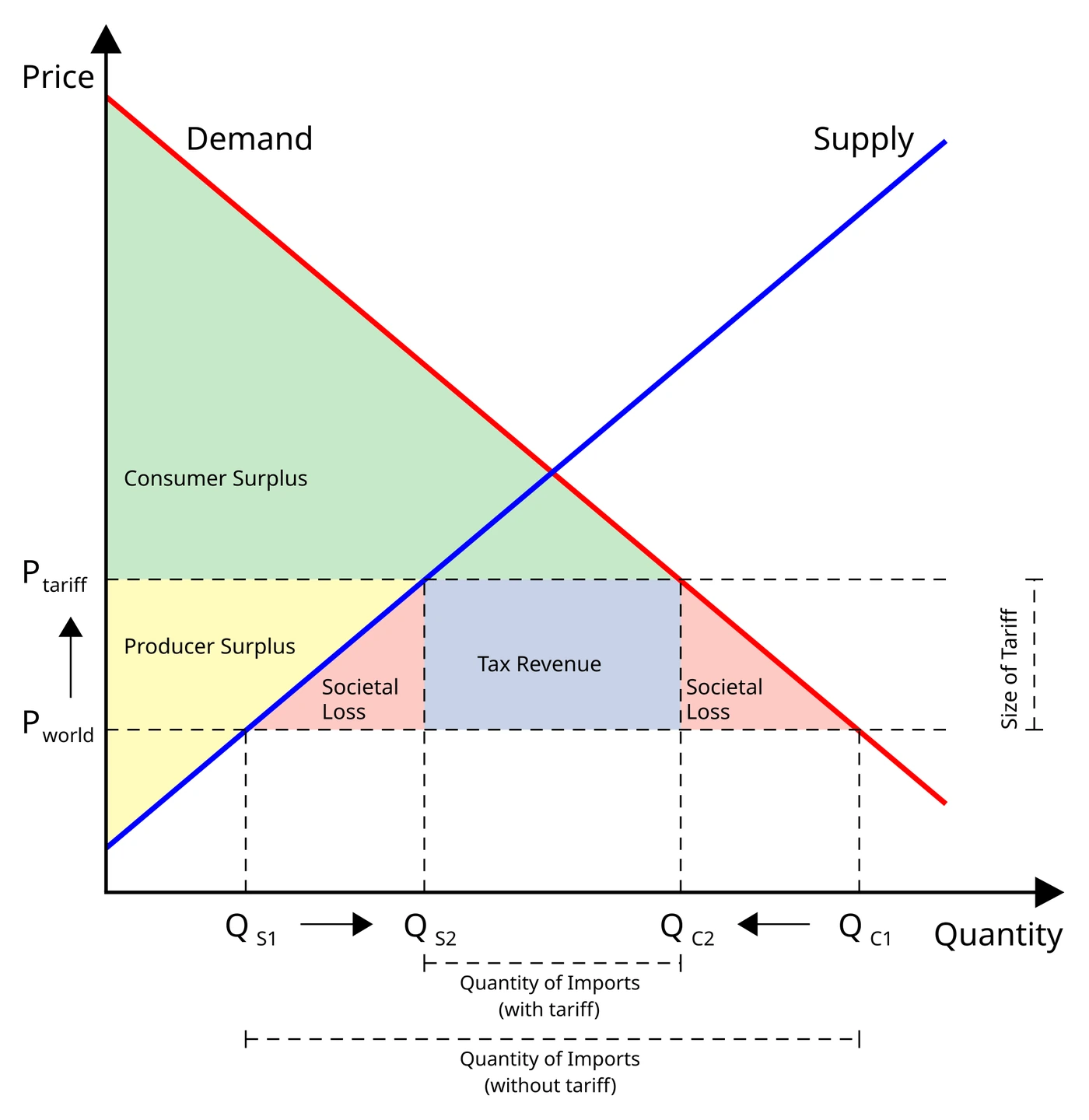
- (import duty). A tax added to the price of imported goods. It makes imports dearer, so consumers switch to domestic substitutes, and it raises revenue for the government.
- . A physical limit on the quantity of a good that may be imported in a period. It caps imports directly and gives domestic producers a larger share of the market, but it raises no revenue for the government.
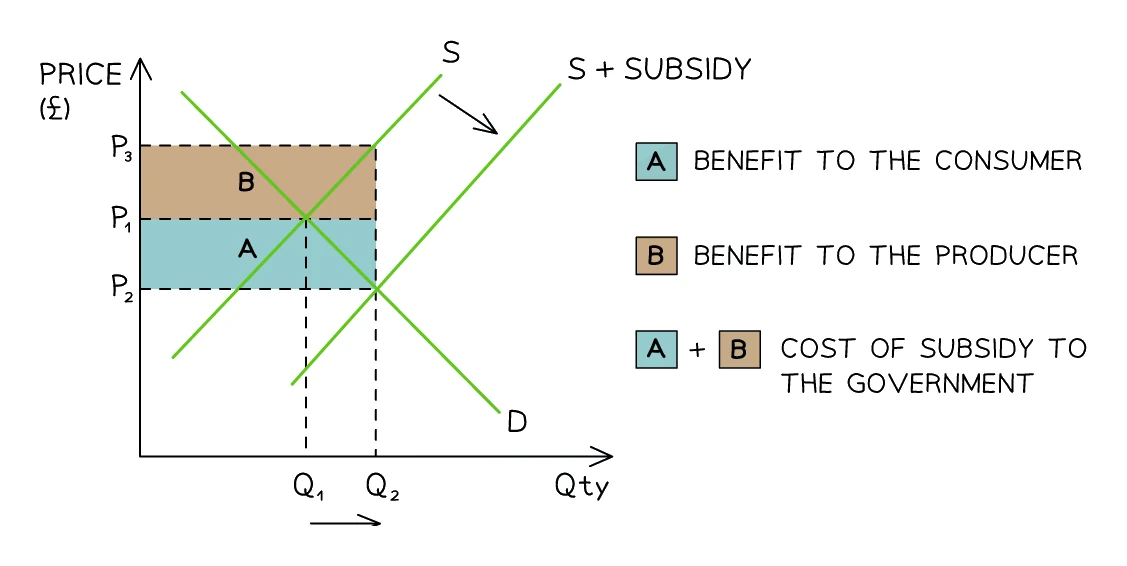
- Subsidy to domestic producers. A government payment that lowers domestic firms' costs, letting them undercut imports. Domestic output rises, but the subsidy is a cost to the government.
- . A complete ban on imports of a good, or on trade with a particular country, usually for political or health reasons.
Common exam question
Naming and choosing a method of protection
Question: Identify two methods of trade protection other than a tariff, or analyse how a government could dismantle protection (2–6 marks).
Asked in 2 of the 11 structured papers. Any relevant method is accepted: import quotas, subsidies, embargoes or bans, licences, and product standards or regulations. The 6-mark version runs the other way: removing tariffs makes imports cheaper; raising quota limits, or scrapping quotas and embargoes, lets more in; ending subsidies means domestic goods are no longer artificially cheap; other countries may then drop their barriers, freeing your exports. Cutting bureaucracy earns credit too.
Set in 4 of the 13 multiple-choice papers. Match the method to the exact aim: a ban is an embargo; a maximum number of imports is a quota; to stop a dumped good, an embargo; to reduce dumped imports, an anti-dumping tariff. A subsidy to home producers does not stop the imports, and changing the exchange rate or interest rates is not a method of protection.
Common exam question
What a tariff or a quota does to the market
Question: Choose the effect of a tariff or an import quota on price, quantity or domestic producers, sometimes as a point on a diagram (1 mark, multiple choice).
Set in 5 of the 13 multiple-choice papers. A tariff is a tax on imports, so it adds to the cost of supplying the imported good: on a diagram that good's supply curve shifts left while demand stays put, so the price rises and the quantity falls. Do not pick the point where demand has shifted too. Dearer imports raise demand for home-produced goods; a tariff does not make home firms more efficient, and it makes neither imports nor home goods cheaper.
A tariff does not fix the quantity imported; a quota does, by capping it. A quota raises no tax revenue, and with fewer imports domestic producers' revenue rises: their output does not fall and the domestic price does not drop. An embargo cuts the trade altogether.
A subsidy to domestic producers shifts supply to the right, from S to S + subsidy, lowering the market price from P1 to P2 and raising quantity from Q1 to Q2. This lets domestic firms undercut imports, but the area A + B (the fall in price to consumers plus the higher price received by producers) is the cost of the subsidy to the government.
6. Reasons for trade restrictions
Governments give several reasons for restricting imports.
- Protect infant (sunrise) industries. New industries may be too small to compete with established foreign rivals; temporary protection lets them grow.
- Protect declining (sunset) industries. Slowing the decline of an old industry gives workers and the area time to adjust and avoids a sudden rise in unemployment.
- Protect strategic industries. A country may want to keep the ability to produce essentials such as food, energy or defence equipment in case trade is cut off.
- Avoid . If foreign firms sell below cost to drive out domestic competitors, a tariff can restore fair competition.
- Reduce a current-account deficit. Cutting imports narrows a trade deficit, at least until trading partners retaliate.
- Raise tax revenue. Tariffs generate revenue, which matters most for governments with limited other ways to collect tax.
- Restrict the import of demerit goods. Barriers can reduce imports of goods that are over-consumed because consumers underestimate the harm they cause, such as narcotics, tobacco or alcohol. An embargo bans them outright, while a high tariff simply makes them dearer.
- Promote environmental sustainability. Restrictions can discourage imports produced in damaging ways or with high transport emissions.
Common exam question
Explaining why a government restricts trade
Question: Analyse why a government may impose tariffs or protect its industries, or explain one way tariffs could help the economy (2–6 marks).
Asked in 3 of the 11 structured papers. Each reason earns a mark, and each step showing how protection achieves it earns another. Infant industries grow to gain economies of scale and lower prices; declining industries shrink slowly, saving jobs; strategic industries keep food supplies safe from sanctions; dumping is kept out; dearer imports improve the current account; tariff revenue funds education; demerit goods are discouraged; and a country may retaliate against others' tariffs.
For both marks in the 2-mark version, one must be for the gain itself (a better current account, more output or more tax revenue); "more revenue" is not enough.
Set in 2 of the 13 multiple-choice papers: a tariff on goods sold below cost aims to stop the other country dumping in yours, and protecting infant industries aims to raise domestic employment.
7. Consequences of trade restrictions
Trade restrictions help some groups and harm others, in both the home country and its trading partners.
Effects on the home country
- Domestic producers in the protected industry gain market share, output and jobs.
- Consumers face higher prices and less choice, which hits low-income households hardest.
- The government may gain revenue (from tariffs) but bears costs (from subsidies).
- Domestic firms may become less efficient over time, because protection reduces the pressure of competition.
- Firms that use imported inputs face higher costs, which can raise their prices and reduce their output and employment.
Effects on trading partners
Trading partners lose export sales to the protecting country, which can reduce their output and employment. They often retaliate with restrictions of their own, so the protecting country's exports fall too. Escalating retaliation can lead to a trade war that leaves all sides worse off.
The overall verdict is that protection can bring short-term gains to a specific industry but tends to impose wider long-term costs through higher prices, lost efficiency and retaliation.
Common exam question
Discussing whether protection helps the economy
Question: Discuss whether or not high tariffs, or a subsidy for an export industry, will help a government achieve a macroeconomic aim such as lower unemployment (8 marks).
Asked in 2 of the 11 structured papers. Both are levels-marked: Level 3 (6–8) needs both sides developed, and a one-sided answer stays in Level 2 (at most 5).
For: dearer imports switch spending to domestic products, raising demand for domestic workers; a subsidy lowers export prices, raising export revenue, output and jobs and improving the current account; tariff revenue can fund subsidies or education and training that make workers more mobile.
Against: partners retaliate, so exports and the demand for domestic workers fall; foreign producers may stay cheaper; output cannot rise at full employment or without resources; dearer imported raw materials raise costs; protected firms grow complacent; export demand may be price-inelastic; extra exports can raise total demand and cause inflation; and the money has an opportunity cost.