1. What economic growth is
Economic growth is an increase in a country's real Gross Domestic Product (GDP) over time. Real GDP is the total value of all goods and services an economy produces in a year, adjusted for inflation.
The key word in the definition is real: growth is measured by real GDP, not nominal GDP. Nominal GDP can rise simply because prices have gone up, whereas real GDP strips out price changes and measures genuine extra output.
Most developed economies aim for steady growth of around 2 to 3% per year: fast enough to raise incomes, slow enough not to trigger excess demand-pull inflation.
2. Measuring economic growth
Economic growth is measured by the change in from one year to the next, expressed as a percentage.
Using real GDP matters. If a country's output is valued at current prices and prices rose by 5%, the figures would show growth even if the economy produced exactly the same goods. Adjusting for inflation gives real GDP, which reflects actual output.
A related figure is real GDP per head, which is real GDP divided by the population. This is mainly an indicator of living standards rather than a measure of growth itself: it shows the average output (and roughly the average income) per person. If a country's real GDP rises by 2% but its population rises by 3%, then GDP per head has actually fallen, and the average person is worse off even though the economy as a whole has grown. So when an examiner asks how economic growth is measured, the answer is real GDP; GDP per head answers a different question, about how living standards are changing.
Common exam question
Defining and measuring economic growth
Question: Explain how economic growth is measured (2 marks), or pick the indicator or definition that describes growth, or say why it is hard to measure where families live on their own crops (1 mark, multiple choice).
Asked in 1 of the 11 structured papers. The 2 marks are separate: one for real, one for what is measured, GDP (the country's output, income or expenditure). Leaving out "real" loses a mark, and GDP per head is not accepted in place of GDP: it shows living standards, not growth.
The same idea is set in 3 of the 13 multiple-choice papers. Growth is a rise in a country's output over time. The wrong options can rise for other reasons: the price level (that is inflation), consumption, total demand, wages and profits, or living standards. Where families eat most of what they farm, that output is never sold, so it goes unrecorded; the weather and low saving are not the reason.
Common exam question
Real growth from GDP and inflation figures
Question: From figures for GDP, real GDP or inflation, choose the country with the fastest real growth, the condition for real GDP to rise, or what a run of real GDP figures shows (1 mark, multiple choice).
Set in 3 of the 13 multiple-choice papers. Real growth is roughly the rise in nominal GDP minus the inflation rate, so real GDP rises only if nominal GDP outgrows prices. Nominal GDP up 12% with 9% inflation is real growth of about 3%; up 25% with 30% inflation is a real fall, despite the bigger headline. Nominal GDP outpacing the population or employment is a per-head or per-worker test, not the real one.
With real figures, any rise shows growth, but work out each rise before saying growth sped up: real GDP of 300, 312, then 318 is growth of 4%, then about 1.9%, so it slowed. Real GDP says nothing about inflation, and growth per head also needs the population.
3. Causes of economic growth
Real GDP rises when the economy either spends more or can produce more. The syllabus groups the causes into three.
An increase in total (aggregate) demand
When total spending in the economy rises (because consumers spend more, firms invest more, the government spends more, or exports rise), firms respond by producing more to meet the extra demand. Higher output means higher real GDP. This is short-run growth: it works as long as the economy has spare capacity (idle workers and machines) to put to use.
An increase in the quantity of resources
The economy grows when it has more of the factors of production to work with: a larger workforce (through population growth or immigration), more capital equipment, the discovery of new natural resources, or more land brought into use. With more resources, the economy can produce more.
An increase in the quality of resources
Growth also comes from better resources rather than just more of them. Better-educated and better-trained workers are more productive; newer and more advanced machinery produces more per hour. Rising productivity means the same number of workers and machines can turn out more output, raising real GDP.
4. Consequences of economic growth
A typical question asks for advantages and disadvantages of growth, so it helps to hold both in mind.
Advantages of growth
- Higher incomes and living standards, as rising output raises wages and lets households consume more goods and services.
- Lower unemployment, because firms expanding output take on more workers.
- Higher tax revenue for the government (more income tax, more spending taxes), which can fund better public services without raising tax rates.
- Reduced poverty, as more people earn a wage and the government can afford to support those on low incomes.
Disadvantages of growth
- Inflation risk, if demand grows faster than the economy's capacity, causing demand-pull inflation.
- Environmental damage, as more production can mean more pollution, congestion and use of non-renewable resources.
- Greater inequality, since the gains from growth do not always reach everyone equally; high earners and asset owners may benefit far more than low-paid workers.
- A worse current account, because rising incomes tend to draw in more imports.
Common exam question
Weighing the benefits and costs of economic growth
Question: Discuss whether everyone gains from growth or whether fast growth brings a current account deficit (6–8 marks), or pick growth's likely result (1 mark, multiple choice).
Asked in 2 of the 11 structured papers. For: higher incomes, more jobs, less poverty, tax revenue for education and healthcare. Against: structural unemployment in declining industries; little gain for the low-paid; pollution, depleted resources, inflation hurting the poor and savers. On the current account, rising incomes pull in imports, firms sell at home instead and inflation hurts exports, unless growth is export-led or investment makes home goods cheaper and better.
The 6-mark version gives up to 4 marks a side, none for a reversed point. The 8-mark one is levels-marked: one side alone cannot rise above the middle level (3–5).
Also set in 3 of the 13 multiple-choice papers: growth uses more resources, raising incomes and tax revenue; falling tax revenue or imports, a bigger budget deficit, more equal incomes are wrong.
5. Recession: causes and consequences
A recession is a period of falling , usually defined as two consecutive quarters (six months) of negative growth. It is the opposite of economic growth.
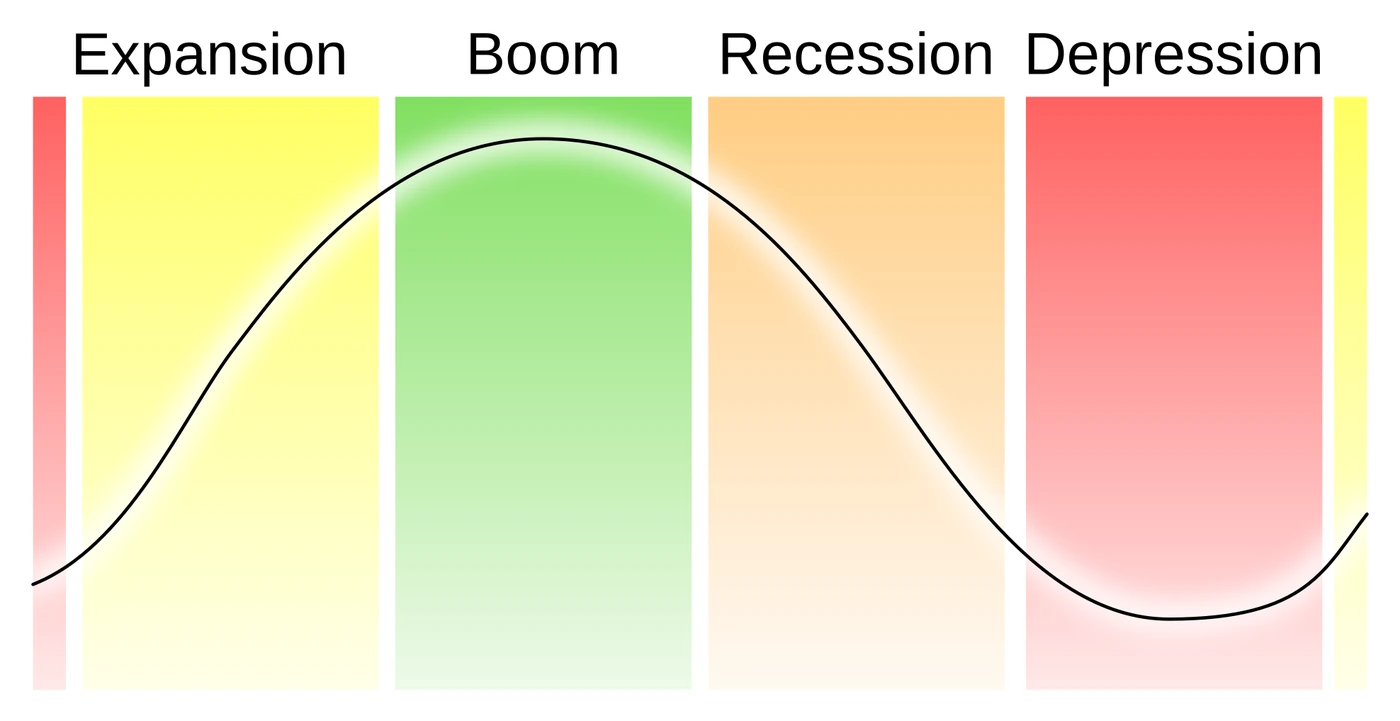
Causes of recession
Mirror the causes of growth. A recession can be caused by:
- A fall in total (aggregate) demand, when consumers and firms spend less (often because confidence has dropped, interest rates have risen, or a global downturn has cut export demand). Firms sell less, cut output and lay off workers.
- A fall in the quantity of resources, for example a shrinking workforce or the loss of capital and infrastructure through war or disaster.
- A fall in the quality of resources, for example if a lack of investment in training or technology leaves workers and machinery less productive.
Consequences of recession
A recession harms several groups at once:
- Consumers face higher unemployment, lower incomes and falling living standards; some are pushed into poverty.
- Workers lose jobs as firms cut back, and those still in work may see wages frozen or cut.
- Producers and firms sell less, earn lower profits, and some shut down; many cut investment because confidence is low.
- The government collects less tax revenue while spending more on unemployment benefits, which pushes the budget toward deficit and may force cuts elsewhere.
In a deep recession these effects feed on each other: lower demand causes job losses, the newly unemployed spend less, demand falls further, and more jobs are lost. This downward spiral is what makes a serious recession hard to escape without policy action.
Exam tip
Take each recession disadvantage two steps
To explain two disadvantages of a recession, you get a mark for naming each and a mark for explaining it. Credited pairs: lower output, so lower incomes, spending and living standards; higher unemployment, so more spent on benefits; lower investment, because confidence falls; firms closing as profits fall; lower tax revenue, so a budget deficit, more national debt or less to spend on education. Two disadvantages named without explanation earn half the marks. Drawing them from different groups the syllabus names (consumers, workers, firms, government) keeps the two points distinct.
6. Policies to promote economic growth
A government can use all of its policy toolkits to lift growth, and the right mix depends on whether the problem is too little demand or too little capacity.
- Expansionary fiscal policy. Cutting taxes or raising government spending increases total demand, encouraging firms to expand output and hire. Most useful when the economy has spare capacity, but if overused it can cause inflation.
- Expansionary monetary policy. Cutting the interest rate lowers the cost of borrowing, so households spend more and firms invest more, raising total demand. It works with a lag and loses traction if rates are already very low.
- Supply-side policy. Spending on education, training and infrastructure, cutting direct taxes, and deregulation raise the economy's productive capacity, allowing growth that does not push up inflation. This is the long-run route to growth, but it is slow to take effect.
In practice a government combines these. Demand-side policies are the quicker response to a recession; supply-side policies are the durable way to raise the economy's long-run rate of growth.