1. The eight characteristics of life
What counts as a living organism?
- Biologists separate everything in the natural world into living and non-living things. A rock is not alive; a mouse is. But what exactly is the test that decides?
- Every living organism, from a bacterium to a blue whale, carries out the same eight life processes. If something does any one of them only sometimes, or relies on another organism's cellular machinery to do them, it is not classed as living
- The most popular acronym for the eight processes is MRS C GREN:
| Letter | Process | What it means |
|---|---|---|
| M | Movement | The organism (or parts of it) can change position or orientation |
| R | Respiration | Chemical reactions inside cells release energy from glucose |
| S | Sensitivity | The organism detects and responds to stimuli in its surroundings |
| C | Control | The organism keeps its internal conditions within tight limits (homeostasis) |
| G | Growth | A permanent increase in size or dry mass |
| R | Reproduction | The organism produces offspring of the same species |
| E | Excretion | Toxic waste products of metabolism are removed |
| N | Nutrition | The organism takes in food (or makes it) to supply energy and raw materials |
- All eight must be present for something to be alive. Viruses fail most of these criteria. They can only reproduce inside a host cell's machinery, which is why most biologists do not class viruses as living organisms
Exam tip
The eight life processes
Learn the eight characteristics in the specification's own words: living organisms require nutrition, respire, excrete their waste, respond to their surroundings, move, control their internal conditions, reproduce, and grow and develop. One paper asks you to state two of them for two marks, one mark each, and any two from this list are credited; "sensitivity" and "homeostasis" are accepted as names for responding to surroundings and controlling internal conditions. Breathing is not one of the eight, so write "respire", never "breathe". A separate multiple-choice question asks for the name of the process that keeps the internal environment constant: homeostasis.
M — Movement
Movement is any action by an organism (or by part of it) that shifts its position or orientation
- When the whole organism moves from one place to another, the special term is locomotion. Animals (and many bacteria) achieve locomotion using legs, fins, wings or flagella
- Plants cannot uproot themselves and walk away, but they can reorient. A sunflower head tracks the Sun across the sky during the day (a movement called heliotropism); roots grow downwards and shoots grow upwards in response to gravity and light
R — Respiration
Respiration is the chemical process by which energy is released from glucose inside every living cell
- This is not the same as breathing (gas exchange). Breathing moves oxygen into the lungs; respiration uses that oxygen inside the cells to release energy
- Two forms:
- Aerobic happens with oxygen present and produces carbon dioxide and water as waste products
- Anaerobic respiration happens without oxygen, produces less energy, and gives different waste products (lactic acid in animals; ethanol and carbon dioxide in yeast)
- The energy released is captured by the cell in the chemical bonds of a molecule called ATP (adenosine triphosphate), the "energy currency" of every cell. ATP then powers everything else the cell does, including movement, building new molecules and transporting substances
S — Sensitivity
Sensitivity is the ability of an organism to detect changes in its surroundings (stimuli) and respond to them in a way that helps its survival
- A stimulus might be light, sound, temperature, touch, gravity, a chemical, or the presence of food or a predator
- Animals use two coordinating systems:
- The nervous system uses fast electrical impulses carried by neurones (receptors → nervous system → effectors)
- The endocrine system uses slower chemical messengers called hormones, carried in the blood
- Plants respond more slowly and use chemicals only. Two important plant responses are:
- Phototropism: shoots grow towards the light so that the leaves get maximum sunlight for photosynthesis
- Geotropism (gravitropism): roots grow downwards in the direction of gravity, anchoring the plant and reaching water; shoots grow upwards against gravity
C — Control
(also called homeostasis) is the maintenance of the internal environment of the body within narrow limits, despite changes in the outside world
- Living cells only function properly within a narrow range of temperature, pH, water content and dissolved-substance concentrations. Homeostasis keeps these conditions stable
- Examples in humans:
- Thermoregulation: keeping body temperature at around 37 °C (sweating and vasodilation cool you down when too hot; shivering and vasoconstriction warm you back up when too cold)
- Osmoregulation: keeping the water and salt content of the blood at a constant level (the kidneys do this, helped by the hormone ADH)
- Blood glucose regulation: keeping blood sugar within a narrow range using insulin and glucagon
- Plants also keep their internal conditions within tight limits. Transpiration (the evaporation of water from leaf stomata) helps cool a plant on a hot day, because the water vapour leaving the leaf carries heat away with it
G — Growth
Growth is a permanent increase in size (and dry mass) of an organism
- Animals grow rapidly between the zygote stage and the adult stage, after which growth stops once the adult size is reached. The body shape often changes too: a baby's head is proportionally much larger than an adult's
- Plants tend to grow throughout their whole life, adding new shoots, leaves, branches and roots year after year. A 1000-year-old oak tree is still growing
- Growth is fuelled by (raw materials) and respiration (energy to build them into new tissue)
R — Reproduction
Reproduction is the process by which an organism produces offspring of the same species
- Without reproduction the species would die out. Reproduction is the only way that one generation passes its genes (and its species' continued existence) to the next
- Two types:
- Sexual reproduction: two parents, two gametes (sex cells) fuse to form a zygote; offspring inherit a mix of DNA from both parents and are genetically different from either. In humans the male gamete is the sperm and the female gamete is the egg (ovum). In flowering plants, the male gamete is inside the pollen grain and the female gamete is inside the ovule
- Asexual reproduction: one parent only; offspring are genetically identical clones of the parent. Mitosis is the cell-division process behind asexual reproduction
- Examples of asexual reproduction:
- Bacteria dividing into two by binary fission
- Amoeba (a protoctist) splitting in half
- Strawberry plants sending out runners that root and form new plants
- Gardeners taking cuttings to grow new plants
E — Excretion
Excretion is the removal of the toxic waste products of metabolism from the body
- "Metabolism" means all the chemical reactions happening inside the cells. Many of these reactions produce waste that would poison the cell if it built up
- Wastes excreted by animals:
- Carbon dioxide from aerobic respiration, removed via the lungs
- Water from respiration, removed via the lungs (water vapour in breath), the skin (sweat) and the kidneys (urine)
- Urea from the breakdown of excess amino acids in the liver, removed by the kidneys in urine
- Wastes excreted by plants:
- Oxygen during the day, produced by photosynthesis
- Carbon dioxide at night, produced by respiration (during the day, the plant's own photosynthesis uses up its respiratory CO₂ before it can leak out)
- is not the same as egestion. Egestion is the removal of undigested food in the faeces, which never entered the cells in the first place and is therefore not a metabolic waste
Exam tip
Faeces are egested, not excreted
Excretion removes the waste products of metabolism made inside cells (carbon dioxide, urea, excess water); egestion removes undigested food as faeces, which never entered the cells. Examiners hold you to the difference in other topics too. When you explain why energy is lost along a food chain, energy lost in urine or urea and energy lost in faeces are separate marks, but "excretes faeces" or "excretes undigested food" earns only one of them. When seeds pass through an animal's gut, write that they are egested or deposited in its faeces: "excreted" is ignored.
N — Nutrition
Nutrition is the taking in of materials needed for energy, and repair
- Two strategies:
- Autotrophic nutrition means building your own food out of simple inorganic raw materials. Green plants are autotrophs: they combine carbon dioxide with water, powered by sunlight absorbed by chlorophyll, to manufacture glucose and release oxygen as a by-product. This process is photosynthesis:
6 CO₂ + 6 H₂O → C₆H₁₂O₆ + 6 O₂ (in the presence of sunlight and chlorophyll)
- **Heterotrophic nutrition** means taking in ready-made food from other organisms. **Animals**, **fungi** and many protoctists are heterotrophs. Animals digest large food molecules into small ones in the gut, and the small molecules are absorbed into the bloodstream and delivered to every cell
2. The main groups of living organisms
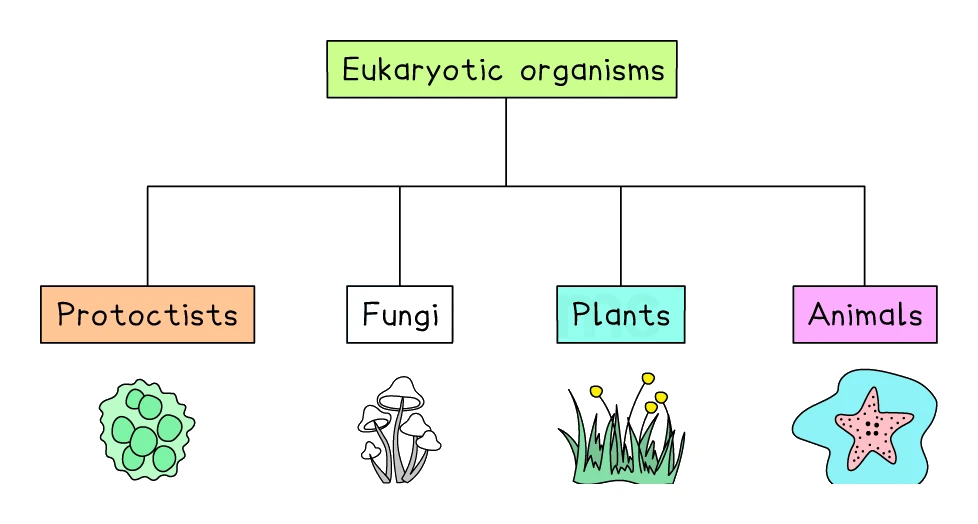
Edexcel 4BI1 does not ask you to learn a "five kingdoms" scheme. Instead it groups organisms by their cell type:
(plants, animals, fungi and protoctists), (for example bacteria), and viruses (non-living particles)
Eukaryotes have cells with a true nucleus and other membrane-bound organelles. Prokaryotes have cells without a true nucleus, and bacteria are the prokaryotes you need to know. Viruses are listed separately because they are not made of cells and are not classed as living (see section 3).
Eukaryotes vs prokaryotes: the headline difference
| Eukaryotes | Prokaryotes | |
|---|---|---|
| Cell size | Larger (typically 10–100 μm) | Much smaller (typically 1–10 μm) |
| Nucleus | Yes, a true nucleus surrounded by a membrane | No; the DNA floats free in the cytoplasm |
| Genetic material | Long linear chromosomes inside the nucleus | A single circular chromosome in the cytoplasm, often with small extra rings of DNA called plasmids |
| Other membrane-bound organelles | Yes: mitochondria, chloroplasts, ER, Golgi etc. | None at all |
| Cell wall? | Some have one (plants, fungi); animals do not | Always; all bacteria have a cell wall made of peptidoglycan (not cellulose or chitin) |
| Single-celled / multicellular? | Can be either | Always single-celled |
Common exam question
Placing an organism in its group from its features
Question: Multiple choice: which group an organism with the stated features belongs to, what its cell wall is made of, or which features two groups share (1 mark).
Asked in 6 of the 23 papers. A chitin cell wall means a fungus: yeast, a single-celled organism with a nucleus and a chitin wall, is a fungus rather than a protoctist, and its wall is chitin, not cellulose. A single-celled organism with a nucleus and a chloroplast, such as Chlorella or phytoplankton, is a protoctist: it cannot be a plant (plants are multicellular) or a bacterium (bacteria have no nucleus).
For shared features, every cell has cytoplasm and a cell membrane, but a cell wall is not universal because animal cells lack one. Photosynthetic protoctists share chloroplasts and a nucleus with plants but not a chitin wall. Animals and fungi both have nuclei and store glycogen, but only animals have nervous coordination.
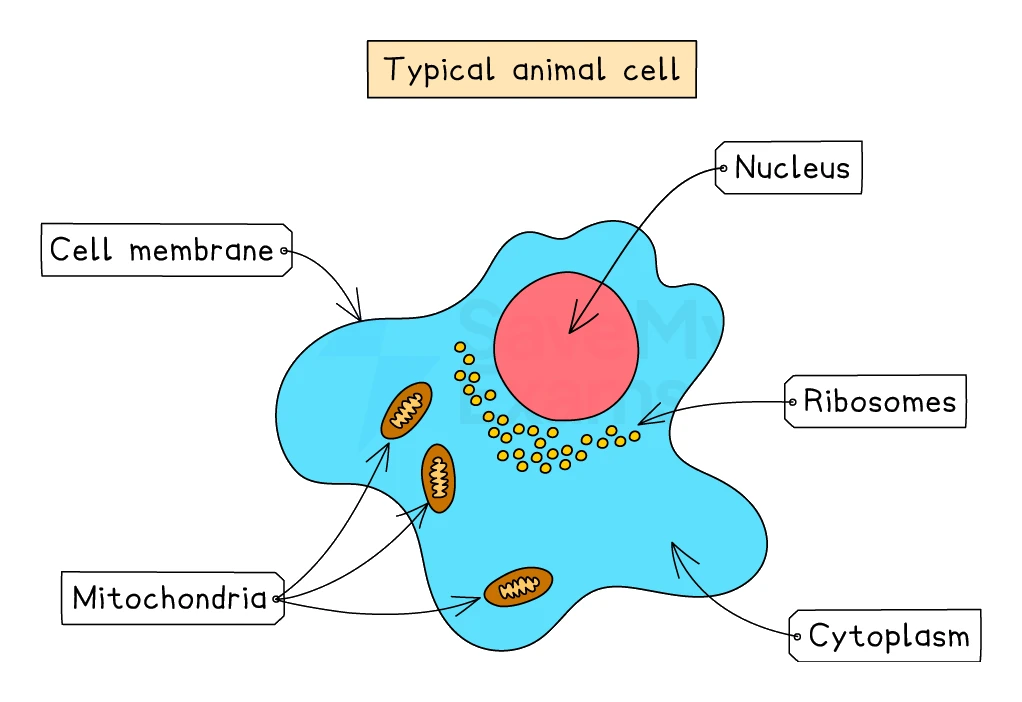
Animals
- Multicellular, built from many cells working together
- Cells have a nucleus and no cell wall
- Cells have no chloroplasts, so animals cannot photosynthesise
- Feed by eating other organisms (heterotrophic). They digest food in a gut and absorb the products
- Often store carbohydrate as glycogen in the liver and muscles
- Have nervous coordination to respond quickly to stimuli
- Can usually move from place to place (locomotion)
- Examples the spec names include an insect such as the housefly or the mosquito. Other animals include humans, dogs, fish and worms
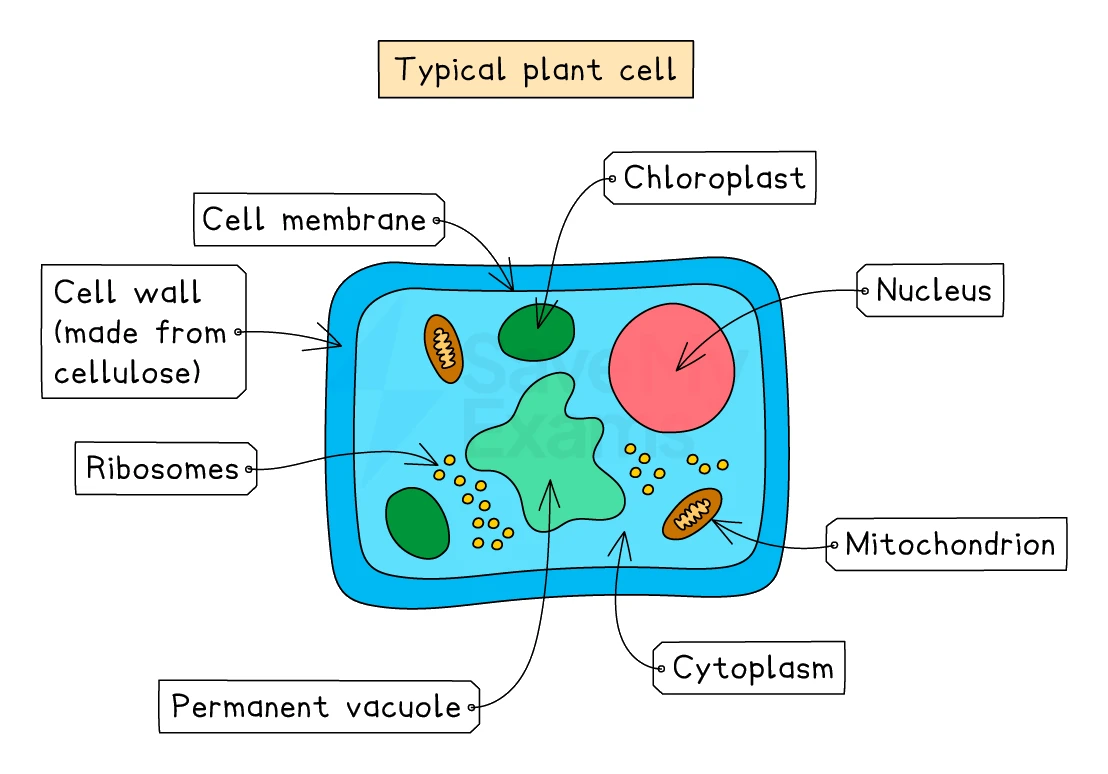
Plants
- Multicellular
- Cells have a nucleus
- Cells have cell walls made of cellulose (a rigid carbohydrate)
- Cells contain chloroplasts, so plants are autotrophic and feed by photosynthesis
- Store carbohydrate as starch in roots and tubers, or as sucrose in fruit and storage tissue
- No nervous coordination; responses to stimuli are slower and chemical
- Are rooted and unable to relocate, although they can reorient themselves (for example, shoots bending towards light)
- Examples the spec names: a cereal such as maize, and a herbaceous legume such as peas or beans. Other plants include rose bushes, oak trees, grasses and ferns
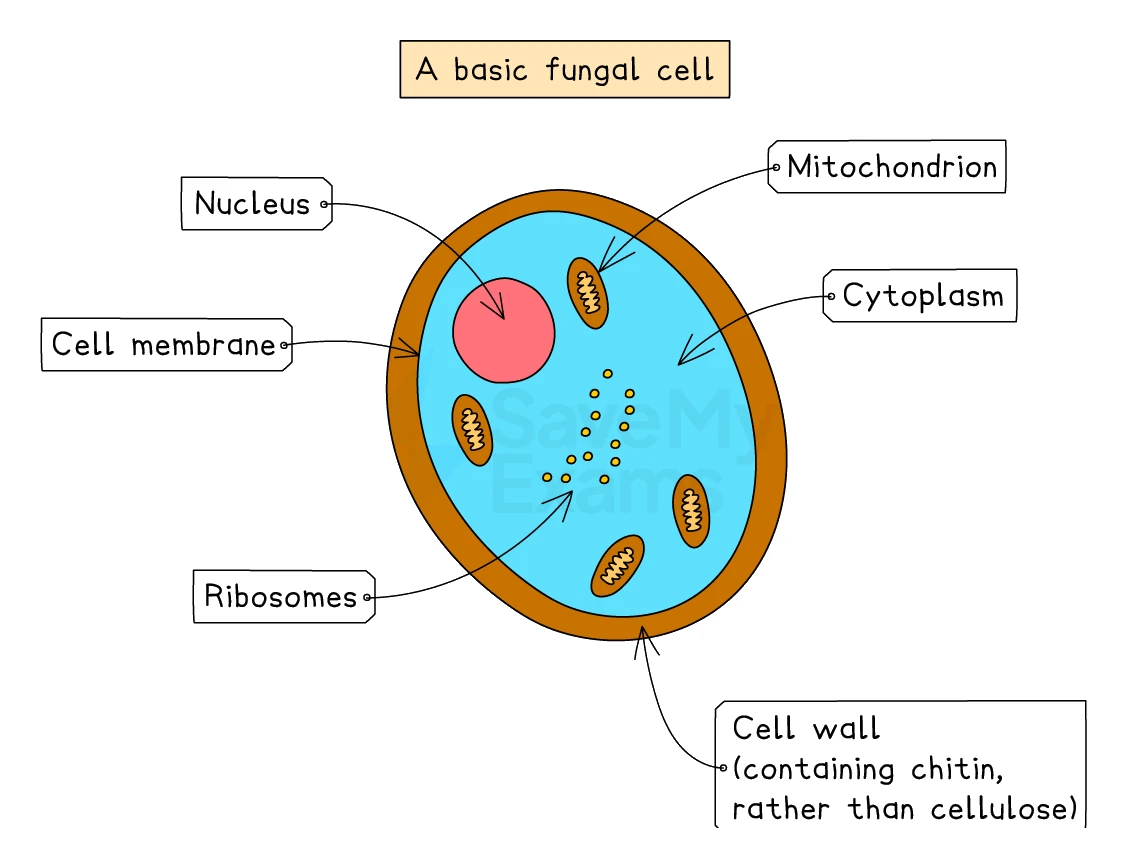
Fungi
- Usually multicellular, but some (e.g. yeast) are single-celled
- Multicellular fungi are built from long thread-like cells called hyphae, which form a tangled network called the mycelium. Each hypha contains many nuclei stretched along its length
- Cells have a nucleus
- Cells have cell walls made of chitin (the same material as insect exoskeletons), not cellulose
- Cells contain no chloroplasts, so fungi cannot photosynthesise
- Feed by saprotrophic nutrition: they release digestive enzymes out onto the surrounding food (dead organic matter), the enzymes break the food down to small molecules outside the fungus, and the fungus then absorbs the digested molecules
- Some fungi are parasitic and feed on living organisms (e.g. athlete's foot fungus feeding on human skin)
- Often store carbohydrate as glycogen
- No nervous coordination
- Examples: mushrooms, mould (e.g. Mucor), yeast (used in baking and brewing)
Common exam question
Describing how fungi and decomposers feed
Question: Describe how a saprotrophic fungus such as a mould obtains its food, or how the bacteria and fungi in a food web obtain energy from dead organic matter (3 marks).
Asked in 2 of the 23 papers. The marks follow the stages of saprotrophic nutrition: the fungus secretes enzymes from its hyphae onto the dead or decaying material, the enzymes digest it outside the organism (extracellular digestion), and the fungus then absorbs the small soluble products. In one scheme "digestive enzymes" earns two of these marks at once, one for digestion and one for the enzymes. The decomposer version also credits a further point: the absorbed food is used in respiration to release energy. "It rots the food" is ignored, so say digested, decomposed or broken down.
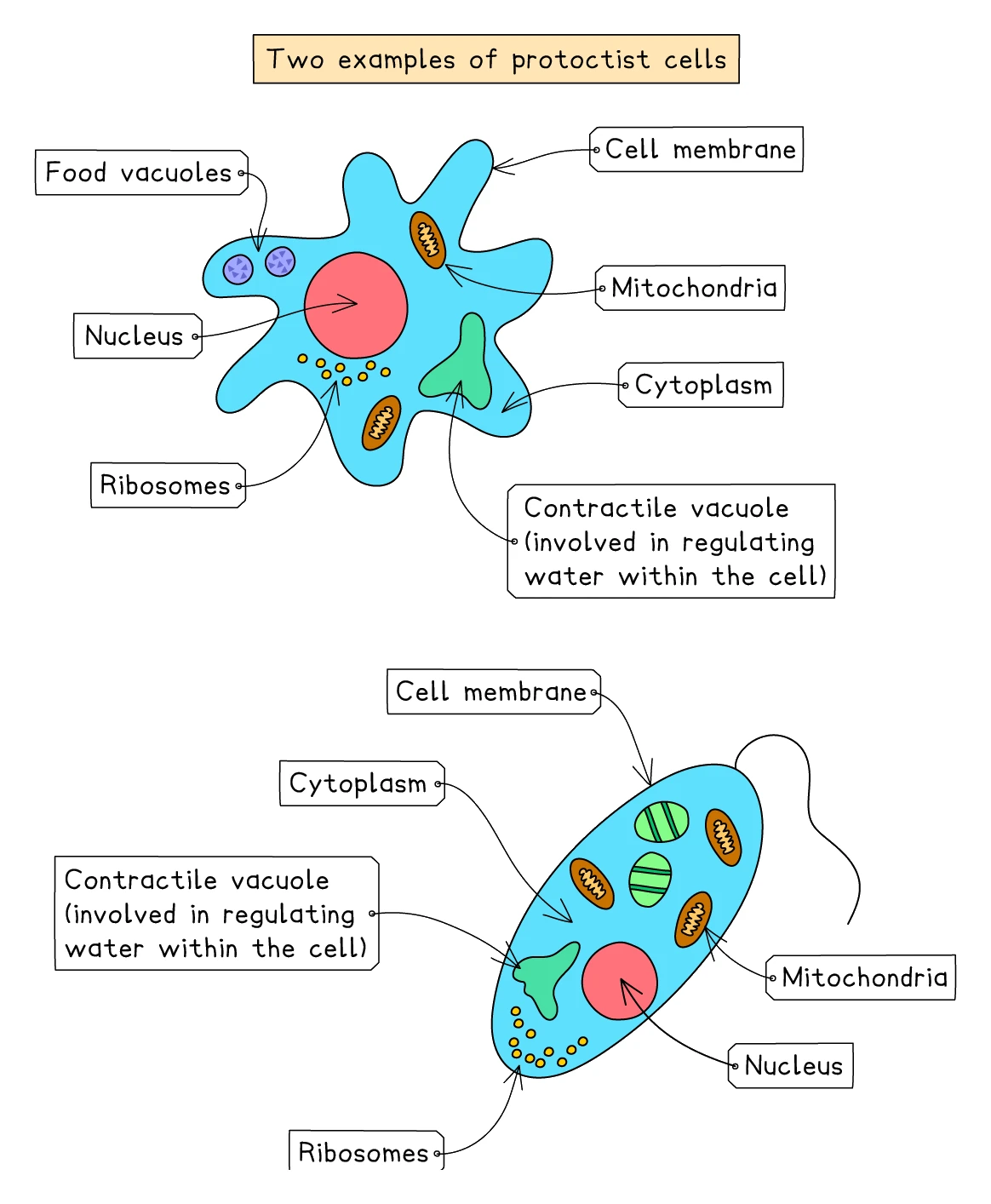
Protoctists
- A very mixed bag. The protoctists are the "kingdom of leftovers", containing every eukaryote that is not clearly a plant, animal or fungus
- Mostly single-celled and microscopic, but some form colonies or chains of cells
- Cells have a nucleus
- Some protoctists are plant-like: they have cellulose cell walls and chloroplasts, and they photosynthesise. Example: Chlorella (a green alga)
- Some protoctists are animal-like: no cell walls, no chloroplasts, and they feed on other organisms. Example: Plasmodium (the malaria parasite)
- No nervous coordination
- Examples: Amoeba (single-celled animal-like), Paramecium (a swimming cilia-covered animal-like protoctist), Plasmodium (parasite that causes malaria), Chlorella (single-celled plant-like alga)
Prokaryotes
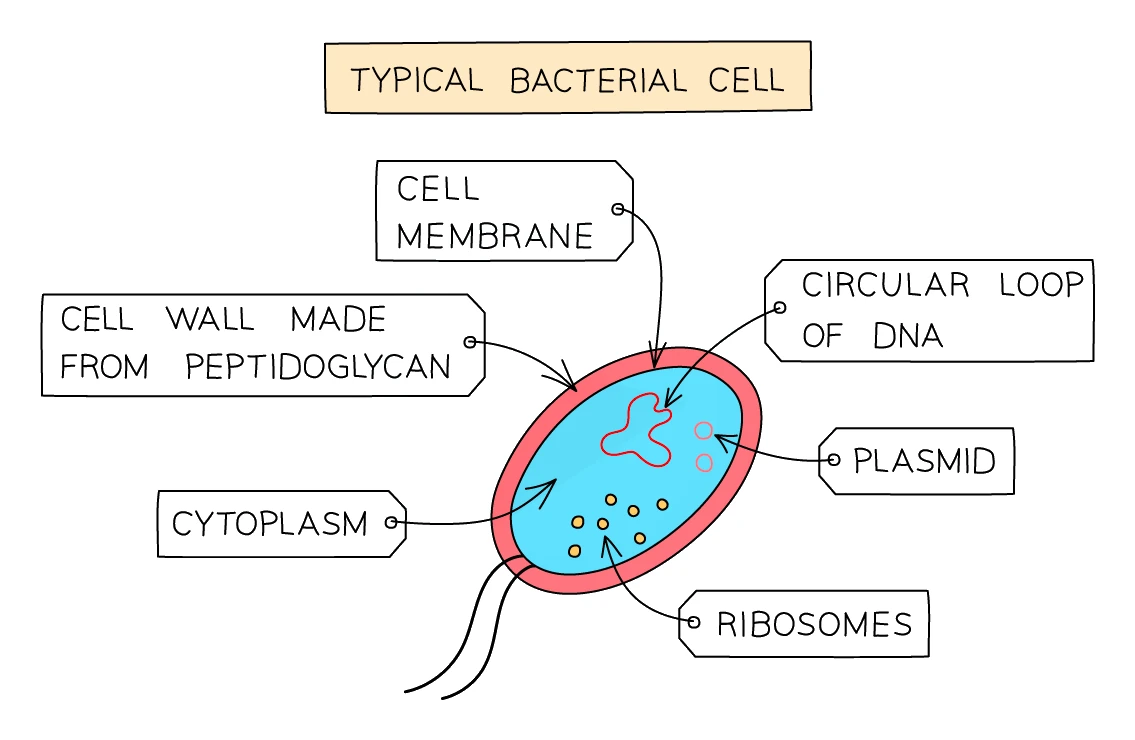
- Always single-celled and microscopic
- Cells have no nucleus. The DNA is a single circular chromosome sitting free in the cytoplasm, sometimes with smaller circular pieces called plasmids
- No membrane-bound organelles at all (no mitochondria, no chloroplasts, no nucleus)
- Have a cell wall (made of peptidoglycan, not cellulose or chitin), a cell membrane inside the wall, and cytoplasm
- Feed in many different ways:
- Some photosynthesise even though they have no chloroplasts. They use chlorophyll-like pigments dissolved in the cytoplasm instead
- Most are heterotrophs, taking nutrients from the bodies of other organisms (alive or dead)
- Those that break down dead organic matter are called saprobionts (or decomposers); they recycle the building blocks of life back into the soil
- The prokaryotes you need to know for this spec are the bacteria
- Examples of bacteria:
- Lactobacillus bulgaricus: rod-shaped; used to make yoghurt from milk
- Pneumococcus (Streptococcus pneumoniae): spherical; causes pneumonia
- Escherichia coli (E. coli): rod-shaped; lives harmlessly in our guts (some strains are harmful)
Common exam question
Completing a passage about fungi or bacteria
Question: Complete a passage about fungi, or about bacteria, by filling each blank with a suitable word or words (4–8 marks, one per blank).
Set in 2 of the 23 papers, both on Paper 1. The blanks want the bold terms from these notes. For fungi: the mycelium is made of thread-like hyphae, the cell wall is chitin, feeding is by secreting enzymes onto the food and absorbing the products, and this is saprotrophic nutrition (saprophytic is also accepted). For bacteria: they are single-celled, have a cell wall made of peptidoglycan, some carry out photosynthesis using the Sun's energy while others are decomposers (or saprotrophs) feeding on dead matter, the genetic material is a circular chromosome (nucleoid is accepted), the small circles of DNA are plasmids, Lactobacillus is the bacterium used to make yoghurt (Streptococcus also scores), and disease-causing bacteria such as Pneumococcus are pathogens.
3. Pathogens
What a pathogen is
A pathogen is an organism that causes disease in another organism (the host)
- Not every microbe is a pathogen; most bacteria and fungi are harmless or even helpful. Only the small subset that cause disease are pathogens
- Pathogens can be bacteria, fungi or protoctists, and also include viruses:
- Bacteria, e.g. Pneumococcus
- Fungi, e.g. some Mucor species, athlete's foot
- Protoctists, e.g. Plasmodium falciparum (malaria)
- Viruses: TMV, HIV, influenza, coronaviruses
- Plants and most animals are not pathogens (with rare exceptions like parasitic worms in animals)
Common exam question
Which groups of organisms include pathogens
Question: Multiple choice: which groups of microorganisms include pathogens, or which of four named organisms can cause a bacterial disease in humans (1 mark).
Asked in 2 of the 23 papers. Pathogens occur in all four groups of microorganism: fungi, bacteria, protoctists and viruses. So when a virus is given and you are asked which other groups include pathogens, the answer is bacteria, fungi and protoctists together; any option naming only two of them is wrong. For the named organisms, place each in its group first: Pneumococcus is the bacterium that causes pneumonia, so it is the bacterial pathogen; Lactobacillus is a bacterium but a harmless one used to make yoghurt; Mucor is a fungus; Chlorella is a protoctist alga and not a pathogen at all; and Plasmodium is the protoctist that causes malaria.
Pathogenic bacteria
- Bacterial pathogens cause disease either by directly damaging host cells or by producing toxins that poison the body
- Pneumococcus is a spherical bacterium that infects the lungs and causes pneumonia. The air sacs (alveoli) fill with fluid, making gas exchange difficult; the patient develops a heavy cough, runs a high temperature, and struggles to breathe
- Pathogenic bacteria can be killed by antibiotics (drugs that target features of bacterial cells, such as their cell walls or ribosomes, without harming the human cells of the patient)
Pathogenic fungi
- The vast majority of fungal diseases attack plants rather than animals. Wheat rust, potato blight and a long list of other crop diseases are caused by fungi
- Mucor: some species of this bread-mould fungus are pathogenic, though most are harmless decomposers
- In humans, athlete's foot and ringworm are fungal infections of the skin
Pathogenic protoctists
- Plasmodium falciparum is a protoctist that causes the most severe form of malaria in humans
- It is spread between humans by the bite of an infected female Anopheles mosquito (the mosquito is the "vector")
- Once inside the body, Plasmodium attacks red blood cells and the liver
- Symptoms: cycles of fever, chills, sweating and fatigue, often life-threatening if not treated
Viruses
- Viruses are not living organisms. They fail seven of the eight MRS C GREN criteria. They can reproduce, but only by hijacking a host cell's machinery; they cannot do it on their own
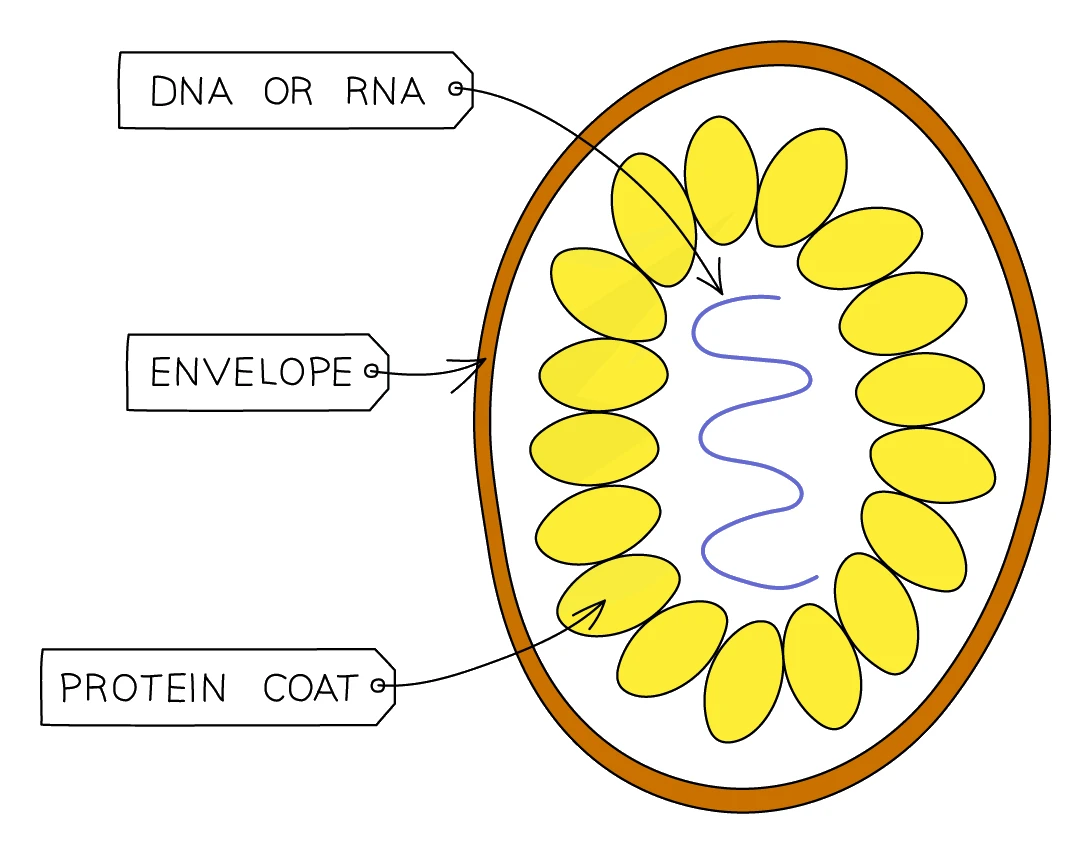
- All viruses share these features:
- They are tiny, much smaller than bacteria (typically 20–300 nm)
- No cellular structure: no cytoplasm, no nucleus, no organelles
- A protein coat (the ) surrounding a core of genetic material
- The genetic material is either DNA or RNA, never both
- Obligate parasites: they can only reproduce inside a living host cell
- Viruses can attack every kind of living thing, from animals and plants through to fungi, protoctists and even bacteria (bacteria-attacking viruses are called bacteriophages)
Common exam question
How a virus differs from a bacterium
Question: Give three differences between the structure of a virus and a bacterium, or pick, from four options, the substance that a virus coat is made of (1–3 marks).
Asked in 2 of the 23 papers. A virus is far smaller, consists of DNA or RNA inside a protein coat (not cellulose, chitin or starch), and has no cell wall, no cell membrane, no cytoplasm or ribosomes, no plasmids and no flagella. Each of these is a separate mark, the converse written for the bacterium counts too, and only your first three answers are marked, so do not pad the list.
The trap is naming something a bacterium lacks as well: "no nucleus", "no mitochondria" and "no chloroplasts" earn nothing, because the comparison is with a prokaryote, and "no loop of DNA" is ignored too.
Exam tip
Why viruses are not considered living organisms
If a question asks for one reason why viruses are not classed as living organisms (1 mark), name a life process they cannot carry out: viruses do not grow, respire, move, excrete, feed or respond to their surroundings, and they cannot reproduce independently (they need a host cell to reproduce). Saying that they do not carry out the life processes, or lack some of the characteristics of life, is also credited. "They need another living organism to survive" and "they live inside another cell" earn nothing on their own, because neither names a missing life process.
Key viral diseases to know
Tobacco mosaic virus (TMV): a plant virus
- Was the first virus ever isolated (by scientists in the 1930s)
- Infects around 150 species of plants, including tobacco, tomato and cucumber
- Symptom: a distinctive mosaic-like pattern of pale and dark patches on the leaves. The virus damages the chloroplasts, so the leaves cannot photosynthesise properly
- The plant grows poorly and crop yields fall
- The virus can survive in soil for around 50 years, making it very hard to eliminate
- There is no treatment. Control relies on good field hygiene and on growing TMV-resistant strains of crops
Common exam question
The effect of tobacco mosaic virus on a plant
Question: Describe the effect of a named virus that infects plants, or explain why plants infected with tobacco mosaic virus grow more slowly than uninfected ones (2–3 marks).
Asked in 2 of the 23 papers. For the describe version, one mark is for naming the virus, normally tobacco mosaic virus (TMV), though any correctly named plant virus is accepted, and the second for its effect: discoloured or yellow leaves, fewer chloroplasts and less chlorophyll, so less photosynthesis. The effect mark depends on the name: an effect given without a correctly named virus scores zero, and "the plant grows less" on its own is not enough.
For the explain version, build the chain from chloroplasts to growth: less chlorophyll absorbs less light, so less photosynthesis, so less glucose, so less starch and cellulose for new cells, or less respiration to release energy for growth. "Less energy is produced" is ignored: write that there is less energy for growth, and never say that energy is produced.
Human Immunodeficiency Virus (HIV): leads to AIDS
- HIV attacks white blood cells of the immune system. After many years (often a decade or more) the immune system is so weakened that the patient cannot fight off other infections. This late stage is called AIDS (Acquired Immune Deficiency Syndrome)
- Routes of HIV transmission:
- Unprotected sexual contact with an infected partner
- Exchange of bodily fluids carrying the virus, particularly blood (for example when drug users share needles or when contaminated blood is given in a transfusion)
- Mother to baby: across the placenta during pregnancy, during birth, or via breast milk during feeding
- There is no cure for HIV, but antiretroviral drugs taken early in the infection can hold the virus in check and prevent the progression to AIDS
- Prevention: condom use, sterile needles, screening of donated blood, antiretroviral treatment of HIV-positive pregnant mothers
Influenza virus: causes flu
- Infects cells lining the airways of the respiratory system
- Symptoms: high fever, body aches, fatigue, coughing, often lasting one to two weeks
- Highly infectious, spread through tiny droplets coughed and sneezed into the air, or by touching contaminated surfaces
- The virus mutates rapidly, which is why a fresh flu vaccine has to be developed every year